Space begins about a hundred kilometres up.
KÁRMÁN carries eight travellers past that mark at once. Eleven minutes out to the black and home, five days orbiting the planet, or a week around the Moon's far side.
Nine engines, then a stillness nobody predicts.
Seven thousand kilonewtons push off the pad in one motion. The roar stays outside. Inside you notice the airframe flexing, your own breath, and the commander calling out figures.
One minute up, the roughest stretch of the ride.
Peak aerodynamic load, 34 kilopascals against the nose cone. It rattles for twenty seconds, then eases as the atmosphere thins away.
The blue fades and slides into violet.
Out there the air is a thousandth as thick as what you breathed at the coast. Nobody has named this particular shade yet. Most voyagers attempt one regardless.
We flew three hundred and eighteen times before a person came aboard.
Every figure below is checked each quarter by the Solano Flight Safety Board and published in full, including the flights we would sooner forget. As of 21 September 2026.
Uncrewed test flights before our first passenger
Crewed flights flown since March 2023
Voyagers carried past the Kármán line
Injuries among crew or passengers. We plan to hold that at zero
Flights on WREN B-07, our most-flown booster
Time from an abort call to capsule separation
ABORT MODES
Three separate systems, live from the pad through to the parachutes.
SCRUBS, 2026
11 of 23 windows held. We wait on weather, never the calendar.
HEAT SHIELD MARGIN
41% above our hottest re-entry, measured in flight, not modelled.
Stars, at eight o'clock in the morning.
They show up before you register that the sky is gone. No twinkle at all: still, sharp, and far more of them than feels plausible.
Beyond here, a wing has nothing left to push against.
Everything past this point is orbit, or a long fall. There is no wall, no jolt to mark it. The commander reads the number once, low, and the cabin quiets.
WREN heads back down. You carry on up.
The booster drops away below and touches down on the coast pad eight minutes later. Engines cut out. Your straps go slack. The window belongs to you now.
Three ways over the
line.
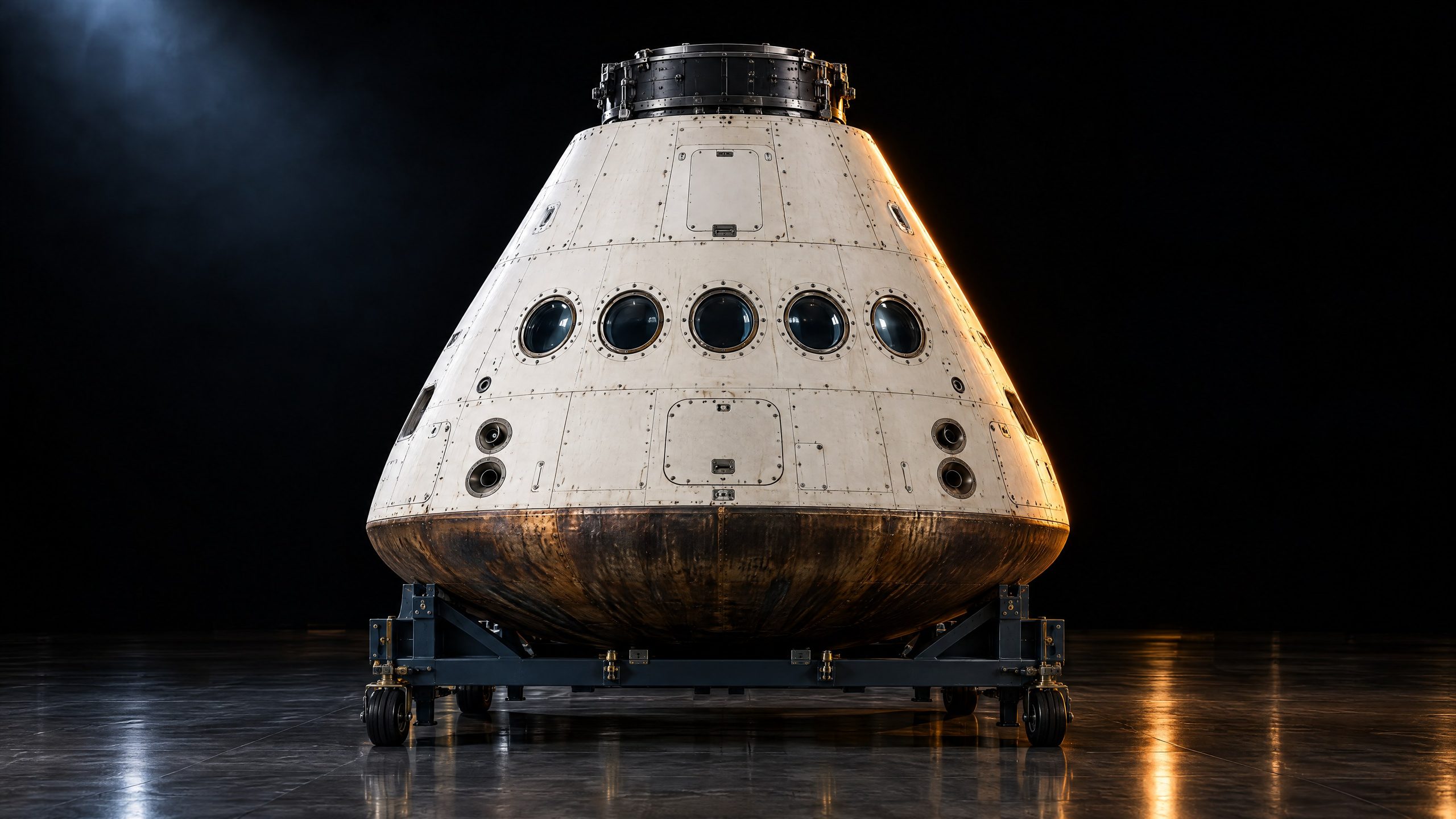
Eight seats, seven windows, and one instruction: let them see.
LYRA is a capsule designed outward from the window. Our engineers got the glass first, then had to build a spacecraft around it. It rides WREN, a booster that lands on the coast and reflies inside nine days.
Nothing holds you up here. You are falling around the planet.
At 7.6 kilometres a second, the ground drops away beneath you exactly as fast as you drop toward it. It looks and feels like floating. It is precisely the reverse.
By night the coastlines glow in strings of sodium light.
Cities outline whole continents. Storms flash over the ocean as if someone were photographing them from below. Nobody sleeps through their first pass in darkness.
Sixteen sunrises daily. Each lasts eight seconds flat.
A thin blue band, a red edge, then the sun all at once, with no atmosphere left to blur it. Ring voyagers see eighty of these. Most give up counting near twelve.
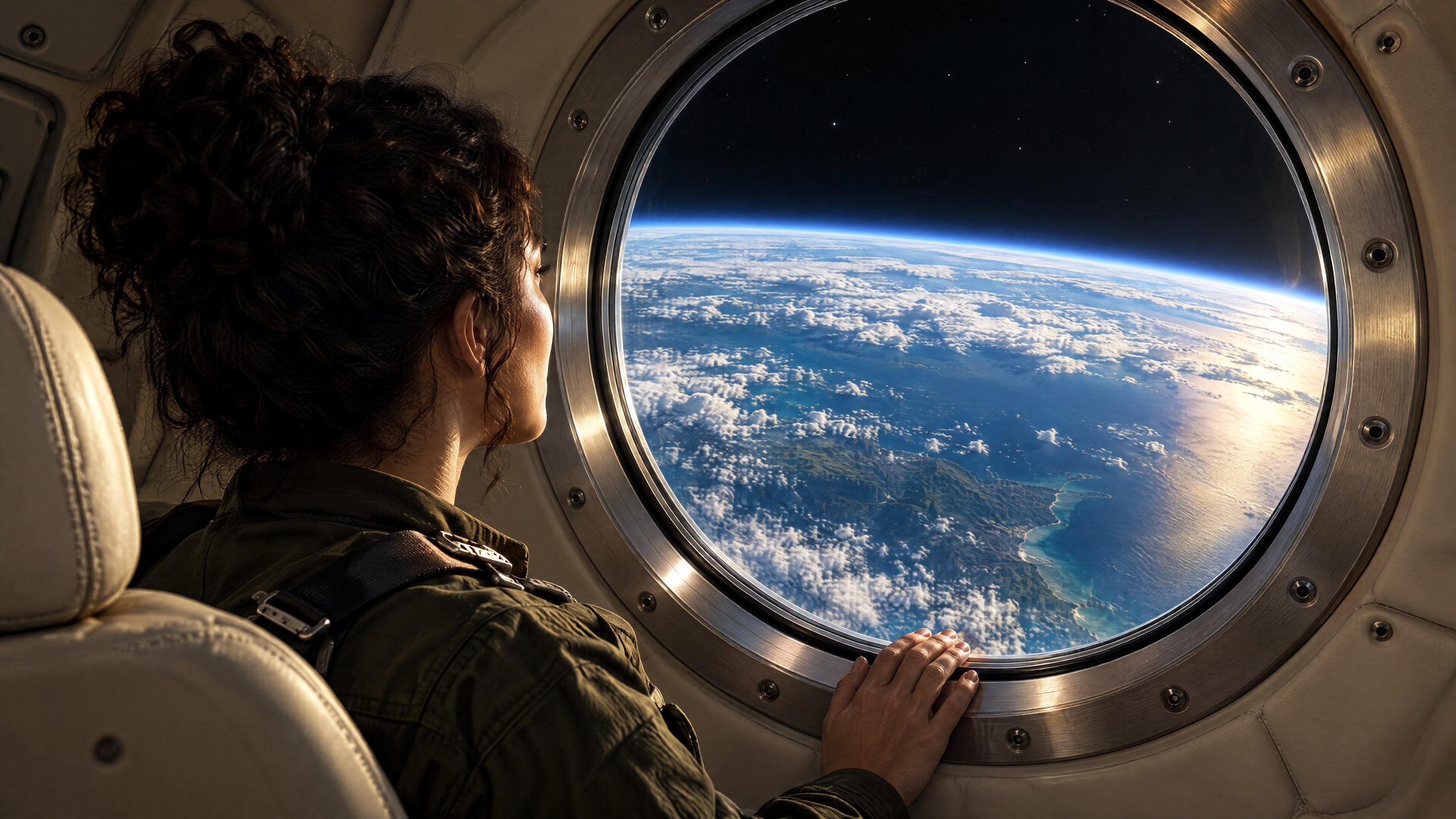
We built the cabin around the window, then the window around you.
Moulded to your frame.
Your seat liner comes from a scan taken on your first day of training. It carries you through 5.4 g and travels home with you after.
Fused silica, 42 centimetres thick.
Three panes, the inner one heated, mounted close enough to your face that the frame drops out of view. Every voyager gets their own.
Dim enough to see by.
Cabin lighting falls to 2 lux on the night side, warm and low near the floor, so your eyes adjust to both the stars and the cities beneath them.
Sea-level, at 21°C.
Sea-level pressure, 40% humidity, filtered and cycled every ninety seconds. Tethys stocks twelve days of it for a seven-day trip.
Six days to turn into
crew.
Ring voyagers train for six days at Solano Coast. Brink uses only three of them, and Tethys adds fifteen more spread across two months. You leave able to handle everything in the cabin you will almost certainly never need.
A five-minute-fifty burn, and Earth's pull releases you.
Tethys departs orbit at 39,000 km/h. Within the hour, the planet you have spent your whole life on shrinks into the window frame.
Two days out, the entire Earth hides behind your thumb.
You watch weather systems spin, the day-night line sweep an ocean, both poles glowing white at once. Everything anyone has ever done sits inside that small circle.
Behind the Moon, the radio falls silent for forty-one minutes.
No Earth, no ground crew on the line. Only the far side sliding past 8,200 kilometres below, terrain fewer than forty people have ever seen with their own eyes.
Then it climbs.
Earthrise, above a grey horizon, in complete silence. Then a voice from Solano Coast, delayed four light-seconds, asking how the view looks.
RESERVE TETHYS